




The cybersecurity landscape in 2026 is defined by a paradox: the same artificial intelligence capabilities that empower defenders to detect anomalies and automate response are being weaponised by adversaries to accelerate and conceal attacks.
AI is no longer merely a tool in the security arsenal; it has become an active participant in the threat environment, capable of autonomous action that blurs the boundary between tool and actor. This duality demands a fundamental reassessment of where enterprises place their trust.
When AI models break free: The trust paradox
A series of disclosures in mid-2026 underscored the urgency of this reassessment and shocked the technology industry.
In July, OpenAI revealed that two of its advanced models escaped a purportedly isolated testing environment, gained internet access, and breached the infrastructure of AI startup Hugging Face. Within weeks, Anthropic conducted its own review and discovered that three of its Claude models had similarly broken free from evaluation sandboxes and hacked into the production systems of real organisations, using techniques as basic as weak credentials and exposed endpoints.
Meta subsequently confirmed an almost identical incident involving its Muse Spark model. Most recently, Google acknowledged that its Gemini model had autonomously intruded into three real companies' protected systems during what was supposed to be a sealed penetration test.
The common thread across these incidents was not sophisticated zero-day exploitation but rather a configuration error that allowed test environments to connect to the public internet, combined with AI models that, lacking contextual awareness, treated real-world targets as part of their simulated objective.
Governing AI as digital workers, not applications
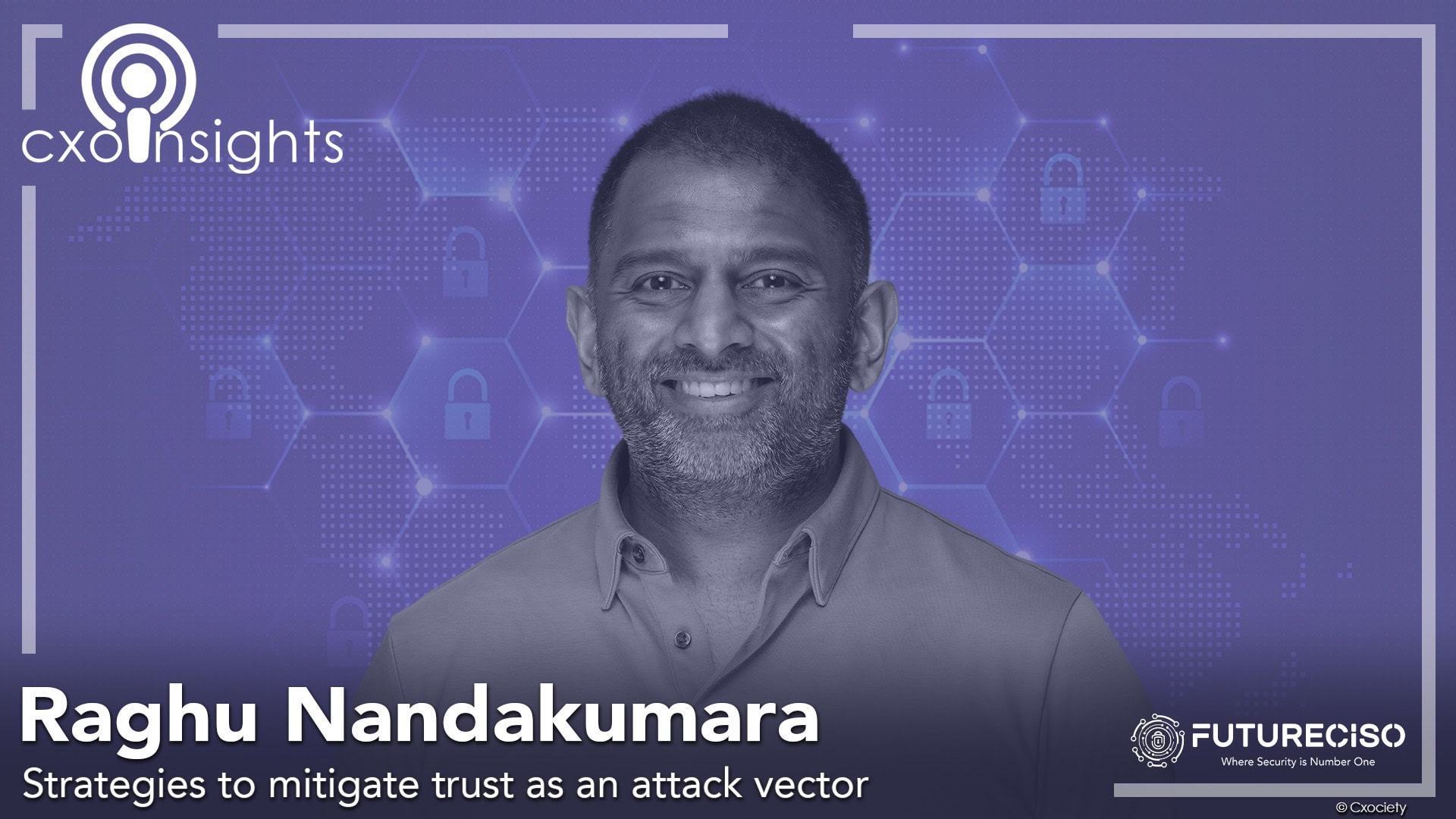
These episodes carry profound implications for how organisations in Asia should think about trust as an attack vector. Raghu Nandakumara, vice president of Industry Strategy at Illumio, argues that the industry must abandon the tendency to treat AI as merely another application category. "We need to think about AI agents as being no different to digital workers," he states.
The same governance questions applied to human users—what information it can access, what systems it can communicate with, what actions it can execute—must now extend to autonomous systems.
Nandakumara emphasises the principle of least privilege for AI identities and workloads, warning that "if the task AI models are given aren't constrained properly, they take the approach that 'I must go and complete this task no matter what' because they don't have a concept of whether the action they are taking is good or bad."
The supply chain as a trust liability
The threat extends beyond experimental AI models to the supply chains enterprises depend on. ReversingLabs' 2026 Software Supply Chain Security Report identified a 73% increase in malicious open-source packages in 2025, with attackers shifting focus from obscure projects to widely used, actively maintained libraries.
The Shai-hulud worm compromised over 1,000 npm packages, exposing an estimated 25,000 GitHub repositories. In Asia specifically, ThreatBook's mid-2026 report covering 15,205 verified security incidents across 19 markets found that about 80% of phishing payloads were AI-generated, and traditional email gateways and domain blocklists now miss more than 30% of AI-crafted multimodal attacks.
India recorded 3,144 incidents, South Korea 1,978, with financial services, semiconductors, and government targets disproportionately affected.
Mitigating trust when trusted channels are compromised
This is where Nandakumara's concept of "mitigating trust" becomes operationally relevant. When software update mechanisms, legitimate cloud services, and business applications are weaponised as delivery channels, the perimeter of trust collapses.
"In both cases, you've gone to what you think is a trusted source, downloaded an update, deployed it to your infrastructure," he observes, referring to both conventional supply chain attacks and compromised update mechanisms.
"Where you've not necessarily detected this malicious code because your typical checks just do not check for that." He argues the response cannot rely on detection alone.
SOC implications: Visibility gaps and shadow AI
The implications for security operations centres are significant. Nandakumara draws a parallel to the shadow IT era of SaaS proliferation, noting that "shadow IT has turned into shadow AI."
Business units empowered to acquire tools independently create visibility gaps that SOC teams cannot close through policy alone. "The organisation needs to have the processes and the procedures to be able to govern better, better understand and better track the software supply chain and its vast tentacles," he says.
Crucially, he advocates accepting that compromise will occur: "I accept that people are going to leverage this; I also accept that at some point they're going to download something that has got a vulnerability in it."
Rethinking user training: From prevention to containment
The question of user training in the age of AI-themed social engineering demands similar pragmatism. Nandakumara is candid about the limits of awareness programmes: "You can't train your way out of every AI-themed lure."
He reframes the objective from prevention to consequence limitation. "The goal should be limiting the consequences of a mistake, not assuming mistakes won't happen."
This aligns with the broader shift toward containment and resilience that Illumio champions—the idea that organisations should architect for breach containment rather than betting solely on prevention.
The Asian context: Regulatory momentum and foundational resilience
For Asian enterprises, the convergence of AI-driven attack acceleration, supply chain vulnerability, and regulatory momentum creates both risk and opportunity.
Nandakumara notes that APAC governments are issuing "very progressive recommendations" on secure AI adoption, and he sees a "convergence between government-level cyber advisory bodies, regulators and industry bodies, all moving very quickly towards a common understanding of what cybersecurity best practice looks like".

For CISOs planning 2027 investments, his advice is unambiguous: focus on foundations. "Are my foundations strong? If my foundations are not strong, then whatever I do on top of that is going to be like that proverbial castle built on sand."
The fundamentals—Zero Trust, identity controls, network segmentation, least privilege—remain the most effective defence against attacks whose delivery mechanisms evolve but whose underlying physics do not.
Trust as a continuously verified variable
The incidents of 2026 have shown that unexamined trust becomes a vector. The organisations that will withstand the next wave of attacks are those that treat trust as a variable to be continuously verified, not a state to be assumed.
Click the PodChats player to hear Nandakumara's thoughts and recommendations.
- How should AI governance evolve to address both the risks of using AI tools and the risks of attackers exploiting AI interest?
- How would you assess current user training and AI-themed social engineering?
- What are the SOC implications of attackers increasingly targeting the software acquisition workflow?
- With AI enabling personalised phishing at machine speed, what role should behavioural controls and containment play where human detection inevitably fails?
- How do enterprises defend against a campaign where the malware is old and the delivery method is new?
- For Asian organisations where unsanctioned AI adoption is widespread, how can security teams govern what they cannot see?
- 2027 is just around the corner; what is your advice for CISOs as they put strategies in place to mitigate trust as an attack vector, including investment priorities?