





The digital world as we know it is built on a foundation of cryptographic trust. Every online transaction, from securing banking details to protecting healthcare records, relies on encryption to keep data safe.
However, the rapid advancement of quantum computing presents a fundamental and growing challenge to this security model. In a landmark move to address this risk, IBM and the Singapore Institute of Technology (SIT) have announced plans to establish a dedicated Quantum-Safe Centre to accelerate Singapore's transition to quantum-safe cybersecurity.
Scheduled to launch by the end of 2026 and located at the SIT Punggol Campus in the Punggol Digital District (PDD), the Centre will serve as a central hub for enterprise leaders, technology practitioners, academics, and government stakeholders.
The initiative directly responds to the "harvest now, decrypt later" threat, where cybercriminals are already collecting sensitive, encrypted data with the intention of decrypting it once access to powerful quantum computers becomes available.
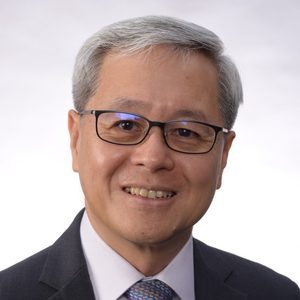
The strategic partnership leverages IBM's global expertise in quantum-safe technology and SIT's applied learning model to address what Professor Chua Kee Chaing, president of SIT, describes as a "workforce readiness challenge".
The Centre aims to build awareness of emerging risks, help organisations assess their quantum-safe readiness, and provide hands-on test-bedding of technologies like IBM Guardium Cryptography Manager and IBM Quantum Safe Explorer within PDD's live environment. Ultimately, the mission is to foster collaboration across industry, academia, and government to support a structured migration to quantum-safe solutions.
Building a quantum-safe talent pipeline
A core pillar of the Quantum-Safe Centre is its focus on education and workforce development. While the immediate plan includes two Continuing Education and Training (CET) programmes co-developed by SIT and IBM, the institute is also committed to embedding quantum-safe principles into its core curricula. This is critical to ensuring a sustainable talent pipeline, moving beyond just upskilling existing professionals.
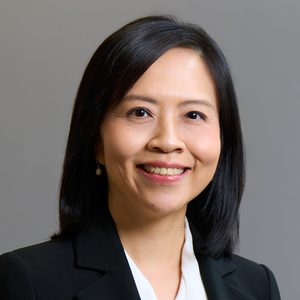
Professor Susanna Leong, deputy president (Academic) & provost at SIT, explained that students are already being introduced to these concepts. "For example, students in the Information Security and Software Engineering programme are introduced to quantum computing through dedicated instructional components that include hands-on exercises. Information Security students go further, engaging with post-quantum cryptography (PQC) and quantum key distribution (QKD) through modules such as applied cryptography and ethical hacking," she elaborated.
She emphasised that SIT's applied learning approach ensures graduates are not just theoretically informed but practically experienced.
"SIT's applied learning approach, which includes industry projects, internships and workplace-integrated learning opportunities, also provides students with exposure to emerging cybersecurity challenges and real-world implementation considerations." Professor Susanna Leong
Looking ahead, the Centre will create a feedback loop, ensuring that insights from applied research and industry collaborations directly inform curriculum development and keep SIT's programmes at the frontier of cybersecurity.
Harnessing real-world environments for sector-specific solutions
The Punggol Digital District provides a unique, real-world environment for testing quantum-safe technologies. The Quantum-Safe Centre will leverage this to create practical, sector-specific migration use cases that reflect Singapore's diverse economic structure, according to Professor Leong. This is essential, as transitioning to quantum-safe cryptography is not a one-size-fits-all solution.
Professor Leong detailed the resources available to organisations, stating, "Organisations will have access to a secure testbed environment to run tests and assessments to understand better their quantum-safe readiness and, depending on their individual use cases, identify cryptographic assets, evaluate potential vulnerabilities and assess quantum-safe technologies before deployment."
This is complemented by the National Quantum-Safe Network (NQSN) in PDD, a physical fibre network that enables testing of quantum-safe communications infrastructure in interconnected operational settings.
This combined environment—the Centre's PQC testbed and the NQSN's QKD network—allows organisations to simulate how quantum-safe security will work in practice, the Professor noted.
"The Centre will work with industry partners to develop and test practical use cases based on organisations' needs and operating environments," elaborated Professor Leong. "This will allow the Centre's activities to evolve alongside industry requirements and support organisations across sectors, including government, financial services, healthcare, telecommunications, critical infrastructure, technology, and higher education and research, as they prepare for the transition to quantum-safe cybersecurity."
Moving from awareness to action with a quantifiable framework
A key challenge for many organisations is understanding their current state of readiness and knowing where to begin their quantum-safe journey. To address this, the Centre is exploring a practical, quantifiable maturity framework.
Professor Leong explained that the framework is intended to be a practical tool, not a replacement for national guidelines.
"A key objective of the Centre is to help organisations move from awareness to action. To support this, SIT is exploring the development of a practical readiness framework that could help organisations better understand their current state and identify priorities for their quantum-safe migration journey." Professor Susanna Leong
Potential areas of assessment include cryptographic asset visibility, exposure to quantum-related risks, and organisational readiness for adopting PQC solutions.
She stressed that this framework would complement national efforts: "Rather, it is envisaged as a practical, operational complement — helping organisations translate national guidelines into concrete readiness assessments and prioritised action plans."
Over the next two to three years, the Centre's success will be measured not just by the framework's development, but by workforce capability development, increased industry collaboration, and the number of organisations evaluating quantum-safe approaches before implementation.
The IBM perspective: Technology, standards, and the 'harvest now' threat

Michael Osborne, chief technology officer of IBM Quantum Safe, has been appointed as SIT's first distinguished visiting scientist to help shape the Centre's initiatives. He brings a wealth of knowledge, particularly regarding the technical tools and global standards needed for a successful transition.
On service-level commitments for critical information infrastructure (CII) organisations, Osborne explained that deployment timelines depend on each organisation's hybrid environment. However, the technology is designed to accelerate the process.
"IBM Guardium Cryptography Manager automates this phase by scanning hybrid clouds and on-premises to catalogue certificates, keys and protocols," he said, adding that the tool allows CII operators to "map their cryptographic assets and identify algorithms implemented in their IT landscape."
This visibility is critical for prioritising remediation efforts and aligning with national migration planning milestones.
Regarding post-quantum cryptography standards, Osborne noted that IBM co-developed three of the algorithms selected by the U.S. National Institute of Standards and Technology (NIST). The Centre in Singapore will serve as a local environment to apply these standards.
"Through the Centre's testbed, organisations can access IBM's migration tools, including IBM Quantum Safe Explorer and IBM Guardium Cryptography Manager. This enables technical teams to test how the current NIST standards and other PQC algorithms perform when integrated into existing systems." Michael Osborne
This hands-on access lets technical teams experiment and turn their learnings into practical migration strategies.
Finally, addressing the pressing 'harvest now, decrypt later' threat, Osborne clarified detection and prevention. He noted that initial data interception is often silent and hard to detect.
Therefore, the most effective approach is securing active environments and future data flows. "Using IBM Quantum Safe Explorer, enterprises can scan their application codebases to identify which legacy algorithms are currently protecting their data," he said.
"By utilising the Centre to transition to quantum-safe algorithms today, organisations ensure that any data intercepted from this point forward remains quantum-safe and resilient."
Securing a digital future
The establishment of the Quantum-Safe Centre by SIT and IBM represents a significant step in Singapore's journey toward a secure digital future. By bringing together world-class technology, applied research, and a focus on workforce development, the Centre is poised to be more than just a think tank.
It is designed to be a practical engine for change, providing organisations with the tools, frameworks, and expertise needed to navigate the complex transition to quantum-safe cryptography. Ultimately, the goal is to ensure that Singapore's organisations and talent are genuinely ready for the quantum era.