




Despite rapid digital acceleration across Southeast Asia, enterprises remain trapped in a costly cycle of reactive cybersecurity and third-party risk management. Fragmented vendor ecosystems, opaque AI integrations, and siloed threat data force CISOs into perpetual firefighting rather than strategic anticipation.
As regulatory expectations tighten and attack surfaces expand through generative and agentic AI, waiting for incidents to strike is no longer viable. Regional leaders must pivot from compliance-driven checkboxes to intelligence-led oversight.
By unifying external threat intelligence, continuous vendor monitoring, and AI-augmented analytics, ASEAN organisations can break the reactive loop and build resilient, forward-looking risk architectures.
The transition, however, demands more than technological upgrades; it requires a fundamental recalibration of governance, cross-functional collaboration, and board-level communication.
From annual audits to continuous assurance
For decades, third-party risk management (TPRM) has relied on static, questionnaire-driven assessments conducted annually or biennially. In today's interconnected digital economy, this approach is fundamentally inadequate.
Organisations are increasingly dependent on cloud-native providers, AI-enabled SaaS platforms, and complex fourth-party networks, rendering point-in-time audits obsolete.
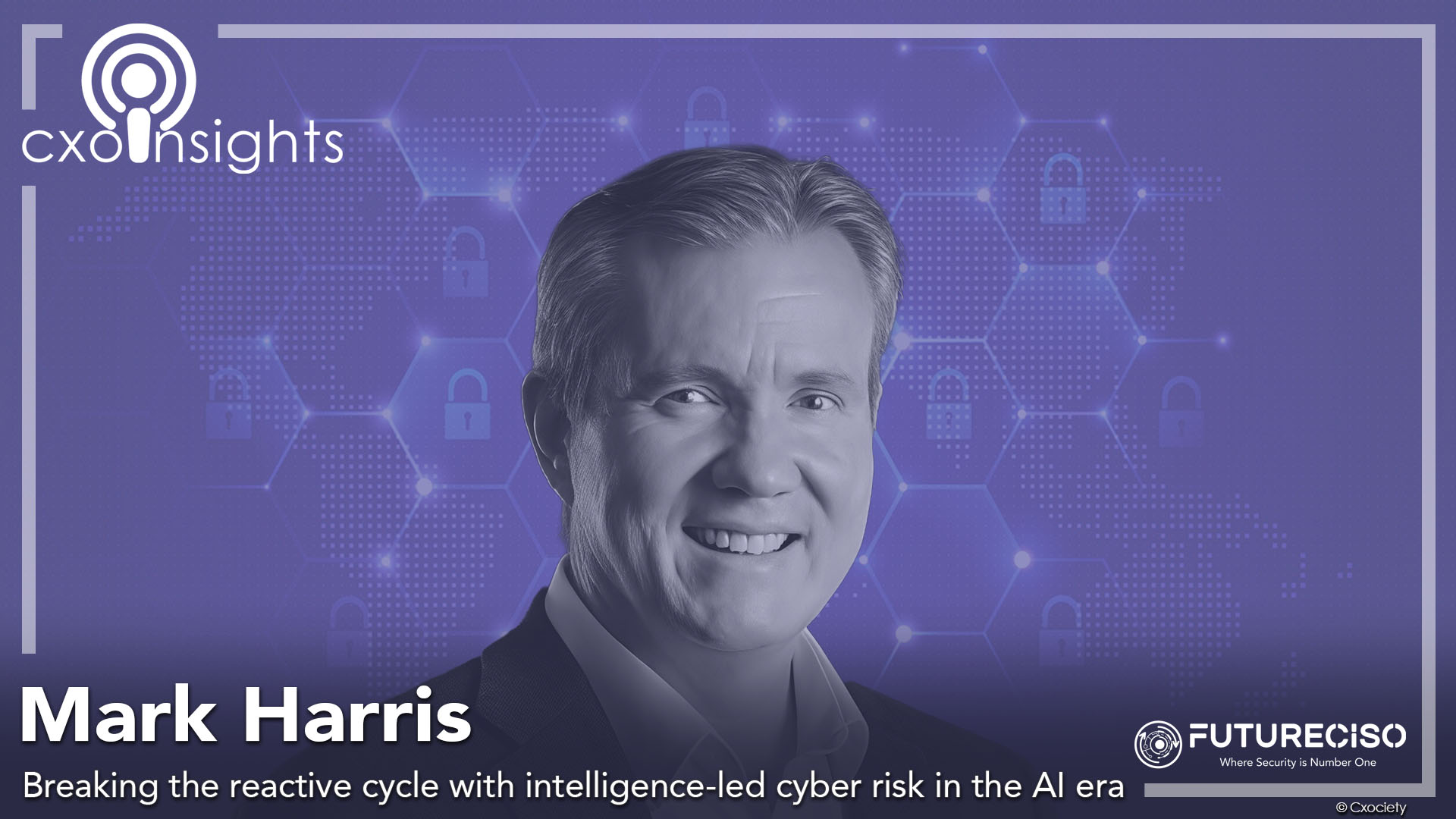
Mark Harris, solutions sales director for Asia-Pacific at Diligent, observes a decisive industry shift: "I think one of the biggest shifts we're seeing within the region at the moment is that organisations are moving away from more what I call static or questionnaire-driven TPR methods to a more continuous intelligence-led oversight."
He warns that: "risk doesn't sleep. It's not an annual exercise. It's something that needs to be assessed and reviewed on an ongoing basis."
This sentiment aligns with Gartner research, which highlights that continuous third-party risk monitoring is now a strategic imperative, with organisations adopting real-time data feeds, automated dependency mapping, and behavioural analytics to replace legacy spreadsheets and self-assessments.
The objective is clear: move from retrospective compliance to predictive resilience.
Visibility before control: Governing the AI black box
The integration of artificial intelligence into vendor offerings has dramatically expanded the threat landscape, particularly through agentic AI systems that operate autonomously across organisational boundaries.
Traditional TPRM frameworks struggle to anticipate systemic cyber exposures when AI models introduce novel failure modes, including data leakage, prompt injection, and unauthorised decision-making.
Harris emphasises that visibility must precede control:

"You cannot govern AI if you cannot see it. Many organisations today do not have a complete understanding of how AI tools are being used, or which business users are using them, or where data is flowing, or how AI-generated outputs are influencing decisions." Mark Harris
Leading consultancies, including Deloitte, echo this warning, noting that shadow AI and unregistered vendor models are among the fastest-growing attack vectors in the region.
To mitigate these risks, CISOs must implement enterprise-wide AI inventories, track model drift, and embed lifecycle governance spanning design, approval, deployment, and retirement. Crucially, automation must not replace accountability.
As Harris advises, "You still need what I call the human in the loop, to go through, to ensure that, and to verify that the information, the outputs from each of these models, is correct." Intelligence-led oversight, therefore, balances algorithmic scale with human judgment.
Harmonising ASEAN's regulatory mosaic
ASEAN's regulatory environment further complicates proactive risk management. Divergent data protection and AI governance frameworks, such as Singapore's MAS guidelines, Indonesia's BSSN directives, the Philippines' NPC regulations, and Thailand's PDPA amendments, often force compliance teams into reactive, siloed operations.
Harmonisation is no longer optional; it is an operational necessity. Harris explains that effective oversight requires "looking at those frameworks, looking at the associated obligations within those frameworks, and then mapping controls to those frameworks as well."
He also suggests: "Focusing on those harmonised controls, and then from there, looking at using automation, using analytics and AI for a continuous control monitoring type of a programme."
Research from PwC's ASEAN Cyber Security publications reinforces this, demonstrating that organisations leveraging unified control mapping and automated monitoring reduce compliance overhead by up to 40% while simultaneously improving audit readiness.
By treating regulatory requirements as interconnected control sets rather than isolated mandates, CISOs can transform compliance from a cost centre into a strategic risk intelligence function.
The boardroom's new risk language
The evolution of risk oversight must also extend to the boardroom. Traditional reporting mechanisms, heavily reliant on colour-coded heat maps, no longer satisfy executive expectations or reflect material business impact.
Harris observes a decisive shift in board priorities:
"Boards are more interested in terms of what the overall impact is to the organisation? What is the financial impact? They want to increasingly understand, well, can that materially disrupt the organisation? Where is the greatest concentration of risk? Where does that exist? How resilient are critical services?" Mark Harris
This mirrors findings from McKinsey & Company, which report that boards now demand scenario modelling, financial exposure quantification, and real-time operational resilience metrics rather than static risk ratings.
Intelligence-led reporting translates technical vulnerabilities into business language, enabling directors to allocate capital, adjust risk appetite, and prioritise remediation with precision. CISOs who succeed in this space do not merely report threats; they contextualise them within strategic objectives, supply chain continuity, and customer trust.
Rationalising the vendor maze
Rationalising the vendor ecosystem remains another critical lever for breaking the reactive cycle. Many enterprises manage thousands of third-party relationships, diluting oversight capacity and obscuring concentration risk.
Harris cites an example of a global organisation with between 22,000 and 55,000 different vendors. "Imagine in terms of trying to manage and control and interact, understand the overall cyber posture of each of those vendors."
Eventually, the client focused on 500 vendors. "They're able to really manage and see in terms of what sorts of vulnerabilities those vendors are having, what their overall risk postures are, and what the impact is to the organisation," narrates Harris.
Vendor consolidation, when paired with external threat intelligence and internal security assessments, creates a holistic risk posture.
According to the World Economic Forum's Global Cybersecurity Outlook, organisations that integrate security scorecards, breach intelligence, and dependency mapping into unified platforms detect supplier vulnerabilities up to 3 times faster than peers using fragmented tools.
By combining internal control validations with external exposure data, CISOs can prioritise tier-one relationships, eliminate redundant tools, and concentrate resources on systemic rather than symptomatic risks.
Intelligence as a strategic enabler
Ultimately, breaking the reactive cycle requires a cultural and operational transformation. Intelligence-led cyber risk management in the AI era is not about deploying more dashboards; it is about embedding continuous visibility, harmonising controls across jurisdictions, empowering boards with financial and operational context, and maintaining human accountability over autonomous systems.
As ASEAN enterprises navigate escalating regulatory scrutiny, AI-driven vendor dependencies, and sophisticated threat actors, the organisations that thrive will be those that treat risk not as a periodic compliance exercise, but as a continuous, intelligence-driven function.
CISOs who champion this shift will not only safeguard their enterprises but also position risk management as a strategic enabler of regional digital growth.
Click the PodChats player to listen as Harris details strategies CISOs and their security teams can take to break the reactive cycle typical of cybersecurity.
- How are ASEAN enterprises currently measuring the gap between reactive incident response and proactive threat intelligence, and which metrics best validate a shift toward predictive oversight?
- Where do traditional third-party risk frameworks fall short in anticipating systemic cyber exposures introduced by agentic AI and cross-border cloud vendors?
- How can CISOs operationalise external threat intelligence and regional peer benchmarking to pre-emptively adjust controls before attackers or regulators force a reaction?
- What are the pros and cons of the consolidation of the cybersecurity stack?
- What balance should organisations strike between AI-driven automation for vendor assessments and human-led judgement for nuanced, jurisdiction-specific supply chain risks?
- Which intelligence-led reporting narratives are successfully converting technical cyber and third-party exposures into actionable board-level strategy across diverse ASEAN markets?
- How are divergent regional data and AI regulations (e.g., PDPA, MAS, BSSN, NPC) creating reactive compliance silos, and what unified frameworks can harmonise oversight?
- What underutilised data signals or external intelligence sources could transform your organisation from reactive firefighting to continuous, predictive risk management?
- As AI-augmented vendor ecosystems become more autonomous, what new governance models will CISOs need to maintain intelligence-led oversight without stifling regional innovation?