






World Password Day 2026 (7 May 2026) arrived not as a celebration of credential hygiene, but as a strategic inflexion point. Across Southeast Asia and Hong Kong, enterprise CISOs are confronting a hard reality: passwords have been systematically bypassed, socially engineered, or rendered irrelevant by automated workflows.
Identity is no longer a static user attribute—it is a continuous, context-aware process spanning humans, machines, and autonomous AI. For regional security leaders, the mandate has shifted from protecting credentials to governing dynamic access and ensuring clean recovery when authentication inevitably fails.
The password illusion in a phishing-first Asia
Social engineering, credential harvesting, and insecure third-party integrations have rendered passwords ineffective as a defence. Attackers no longer brute-force hashes; they exploit human psychology and application trust chains.

Cynthia Lee, APAC VP at Delinea, captures the regional reality: “World Password Day feels increasingly outdated. Passwords can no longer be relied on as a meaningful line of defence, as attackers routinely bypass them through social engineering and third-party apps.”
In Southeast Asia, where SaaS proliferation (see Grand View Research chart below) and mobile-first workforces (11.66% CAGR per Market Data Forecast) outpace legacy IAM modernisation, password complexity policies offer negligible risk reduction.
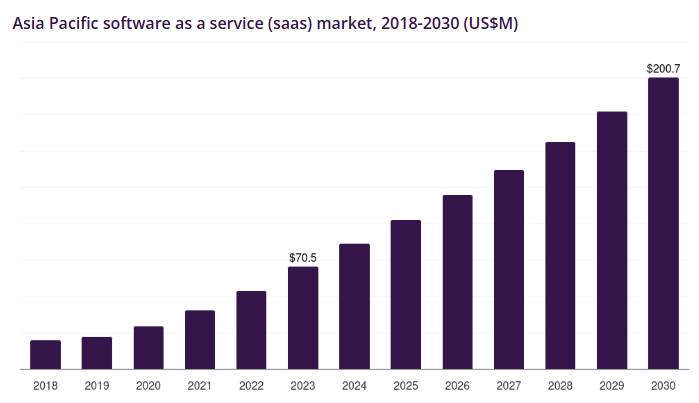
Source: Grand View Research
CISOs are discovering that authentication is frequently circumvented before a single password is guessed, making traditional credential-focused playbooks obsolete.
The visibility gap that cripples recovery
While credentials weaken at the perimeter, a structural vulnerability is emerging at the application layer: unsanctioned AI and standing machine access.
Organisations across the region are deploying generative AI and autonomous agents to accelerate productivity, but many are granting them persistent, unmonitored access to core systems.

Highlighting the visibility deficit this creates, Mimecast VP & GM for APAC Nicky Choo says: “The way work gets done has quietly shifted… AI tools and autonomous agents now retrieve information, generate outputs, and inform decisions, often without traditional logins, and increasingly without IT’s knowledge or approval.”
This shadow AI ecosystem operates entirely outside audit trails and conventional authentication. Compromised passwords become irrelevant because the access pathway was never credential-bound. The visibility problem directly impacts post-incident response.
As Joseph Chan, regional VP for Greater China & Mongolia at Veeam, notes: “The same research found that 42% of organisations have limited visibility into AI tools operating across their environments, while 43% said AI adoption is moving faster than their ability to secure the data underneath it. That is not just a security issue. It is a recovery issue, too.”
Traditional authentication was built for human speed, but AI agents and connected SaaS platforms operate continuously. Without pre-incident visibility into data access paths, verifying exposure and initiating clean recovery becomes guesswork.
The confidence trap: Authentication isn’t resilience
Asia’s identity governance landscape has historically conflated compliance with capability. Regulators across the region are tightening mandates around data localisation, AI transparency, and breach reporting, but many organisations still mistake having controls for being resilient.
Chan says research across 900+ security leaders reveals a critical gap: “While 90% said they were highly confident in their ability to recover from a cyber incident within defined RTOs, the reality was very different: among organisations hit by ransomware, only 28% fully recovered their data.”
Authentication may be where an incident starts, but resilience determines how it ends. When identity is compromised, the blast radius widens, containment slows, and recovery validation becomes nearly impossible if credential sprawl and standing privileges obscure what was touched. For CISOs in Asia, this means identity strategy must be inseparable from business continuity. Proving compliance is no longer enough; proving recoverability is mandatory.
The Singapore signal & the AI agent vulnerability
Regional awareness of this architectural blind spot is crystallising, particularly in highly digitised hubs. Delinea’s Lee notes that “72% of Singaporean leaders acknowledge that granting standing access to AI agents is increasing their security risk.”
AI agents themselves have become attractive attack surfaces. Poorly scoped permissions, prompt injection flaws, and unmonitored token caching can cause agents to leak credentials or serve as lateral movement footholds inadvertently.
In 2026, AI must be treated as a non-human identity with scoped, auditable, and time-bound access. She outlines the operational shift: “Organisations can build true resilience by rethinking access altogether. For example, they can adopt ephemeral permissions, which last just for a set period, or just-in-time (JIT) access management, to ensure privileges exist only when needed, and drastically reduce the window of opportunity for attackers.”
NE Asia’s phishing-resistant push vs SE Asia’s legacy friction
Northeast Asia has leveraged regulatory tailwinds and national digital ID frameworks to accelerate the adoption of phishing-resistant architecture. Japan’s METI-backed passkey roadmaps, South Korea’s FIDO2 enterprise mandates, and China’s PIPL-driven authentication audits have reduced reliance on legacy credentials in regulated sectors by over 40% since 2024.
Southeast Asia faces greater architectural complexity. Varying PDPA implementations, cross-border data transfer restrictions, and sprawling legacy IT estates make wholesale password elimination operationally disruptive.
Instead, SE Asian CISOs are adopting a phased approach to identity modernisation: cloud identity brokers for legacy app translation, JIT privilege escalation for break-glass scenarios, and strict API governance for AI integrations.
The regional strategy isn’t immediate password eradication, but risk isolation through continuous access validation, standing privilege elimination, and validated recovery protocols.
From static gates to continuous verification & clean recovery
The industry consensus for 2026 converges on a single architectural paradigm: Zero Standing Privilege paired with resilient identity governance.

Veeam’s Chan emphasises that organisations recovering well consistently execute four practices: Visibility into data movement and access paths, Enforced Controls that translate policy into day-to-day execution, Tested Recovery validated through realistic exercises, and Executive Alignment with shared metrics across security, IT, and business leadership.
Identity cuts across all four. For CISOs across both regions, securing identity in 2026 requires three actionable shifts:
- Eliminate standing privilege: Transition from perpetual access to ephemeral, JIT-approved sessions for humans, service accounts, and AI agents.
- Map & govern non-human identities: Treat AI tools, bots, and autonomous workflows as first-class identities with scoped permissions, continuous telemetry, and pre-incident access logging.
- Validate recovery, don’t assume it: Integrate identity posture into disaster recovery testing. If credential sprawl or AI token leakage can’t be isolated during a tabletop exercise, clean data restoration is unlikely during a real incident.
The turning point
World Password Day 2026 marks the definitive end of credential-centric security and the beginning of identity-led resilience. The strongest defence isn’t a longer passphrase or a stronger gate; it’s continuous visibility into who and what is behind it, strict enforcement of least privilege, and proven capability to contain and recover when authentication fails.
As Chan frames it for the 2026 enterprise: “World Password Day is still a useful reminder. But the more important question is this: when authentication fails, is your organisation actually set up to contain the damage and recover cleanly?”
For CISOs in Southeast and Northeast Asia, the answer to that question will dictate their regulatory standing, operational continuity, and strategic trust in the AI era.