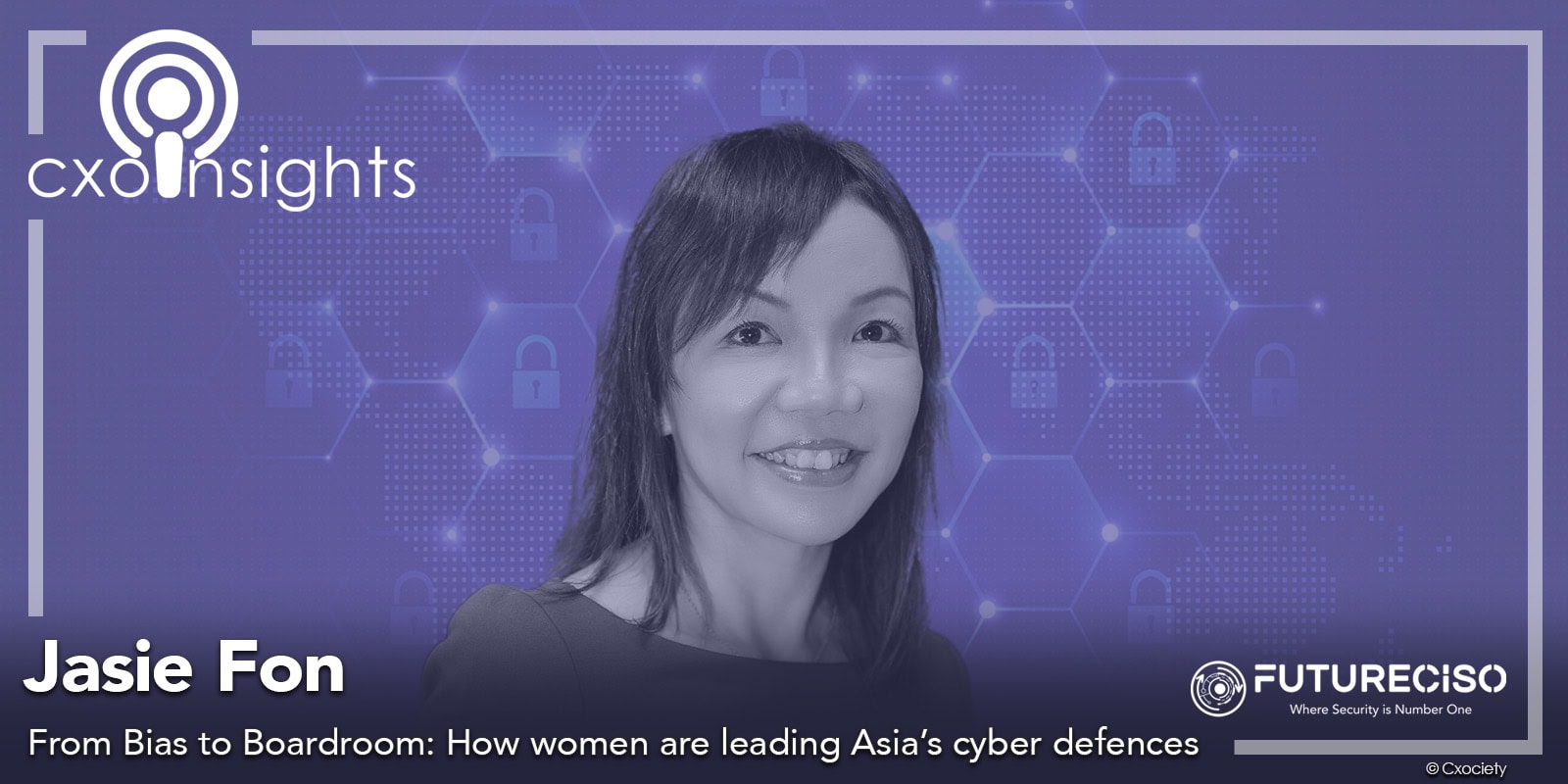
As of 2025, women represent just 24% of the global cybersecurity workforce, with figures in Asia lagging at under 20%—a stark reminder of the persistent gender gap in one of the world's most critical and fast‑evolving sectors. Yet this imbalance also signals immense untapped potential.
Across Singapore, India, Japan, and beyond, women professionals are increasingly stepping into roles as threat analysts, chief information security officers, cyber policy advisors, and entrepreneurs, bringing diverse perspectives that strengthen organisational resilience and innovation.
While cultural barriers, limited mentorship, and structural inequities remain, targeted initiatives and shifting workplace norms are beginning to accelerate inclusion. In an era where cyber threats transcend borders, empowering more women in cybersecurity isn't just about equity—it’s a strategic imperative for Asia's digital future.
Women are slowly transforming the region's cybersecurity leadership, but as Ping Identity's regional vice president for Asia, Jasie Fon, makes clear, the journey from bias to boardroom still demands intentional choices, resilient mindsets, and human‑centred leadership.
“I chose influence and accountability”
Fon traces her technology career back to an early administrative role at IBM in the 1990s, where a late‑night year‑end order incident became a turning point. After being spoken to disrespectfully (in her view) by a senior salesperson on New Year's Eve, she processed the deal.
However, she resigned the next day—during the Asian Financial Crisis—because the experience crystallised what she wanted from her career: influence, accountability, and respect for every role in the organisation.
“That experience really shaped two core values that I carry even until today,” she says: treating every function with dignity and respect and collaborating across all functions. It also pushed her to step deliberately into sales and leadership roles in the technology space, including in Korea, where her work became increasingly centred on people, impact and purpose.
Turning bias into a catalyst, not a label
Fon is candid about bias, but even more direct about how she responds to it. Early in her career, a mentor told her, “Whatever doesn't kill you makes you stronger,” a mindset she has applied by choosing how to respond, rather than allowing setbacks to define her.
She frames each challenge as data—an insight into herself, others, and the systems she operates within—lessons she now passes on, particularly to women navigating similar dynamics.
In one job interview she took for a senior Asia leadership role at a large multinational, the interviewer opened by saying that, as a woman, she was already in a good position because the company needed to improve its diversity ratio. Fon thanked him and declined to proceed, stating clearly that she expected to be evaluated on her capabilities, achievements, and credentials, not just her gender.
Her refusal, she believes, created “a moment of awareness” that brought his unconscious bias to the surface. She uses such stories to encourage women to challenge biased perspectives “thoughtfully and confidently, calmly” and to help others recognise their own blind spots.
Third‑party research underscores why this mindset matters. Recent analysis from ISC2 suggests that women likely represent only 20–25% of the global cybersecurity workforce, with progress on inclusion remaining sluggish despite a widening skills gap.
In the Asia‑Pacific region, women's participation in cybersecurity has historically lagged, with some studies citing single‑digit representation in specific markets and less than 10% across parts of Asia and the Pacific.
These figures highlight why treating women as “statistics” for diversity optics is not just insulting, but also strategically shortsighted for organisations facing acute talent shortages.
Leading in the age of AI: science and the “arts” of leadership
A recurring theme for Fon is that leadership in cybersecurity and identity is no longer about being the most technical person in the room. “Technology moves too fast for anyone to master everything,” she notes; instead, leadership is about being consistent, trusted, and “the most human” when applying judgment in complex situations, especially as AI amplifies both capability and risk.
She is intentional about staying technically fluent in identity, security, data and governance, taking external courses—including an intensive five‑day programme on generative AI—to ensure she can ask relevant questions and understand the implications of technology choices for customers and partners.
At the same time, she invests heavily in what she describes as the “arts”: decision‑making, communication, coaching, empathy and listening. “As AI accelerates execution, leadership becomes even more important,” she argues, because leaders must set expectations, ask better questions, and exercise responsible human judgment over AI recommendations.
Platforms like Ping Identity illustrate this convergence of technical depth and human‑centred control. The company's identity solutions support capabilities such as adaptive multi‑factor authentication, federated identity management and AI‑enhanced anomaly detection to secure access across hybrid and cloud environments.
Yet, as Fon's comments imply, tools alone are not enough; cyber leaders must decide when, where, and why to apply them, balancing security, usability, and ethics.
Learning with intention, not motion
For Fon, continuous learning is not a personal hobby but “a core leadership responsibility,” especially in cybersecurity, where credibility depends on staying relevant, informed, and grounded in sound judgment.
She distinguishes between learning for its own sake and learning with intention: understanding market trends, how customer buying behaviour differs between Japan, India and Southeast Asia, and how regional context shapes technology decisions.
Her approach blends formal and informal learning. She attends thought‑leadership events and seminars to stay current on best practices, while also taking external courses—beyond company training—to model a growth mindset for her team. Rather than mandating training top‑down, she “walks the talk” so others follow.
This aligns with broader inclusion research in cybersecurity, which finds that environments where leaders actively demonstrate inclusive and developmental behaviours tend to report better experiences for women and more engaged teams overall.
Adaptability, in her view, is not merely reacting quickly, but continuously updating one's understanding with purpose and then pivoting strategy and communication accordingly. That mindset is increasingly critical as identity, AI, and cybersecurity converge and as attack surfaces and regulatory expectations shift across Asian markets.
Redefining work–life integration as a series of seasons
Fon rejects the idea of work–life balance as a fixed achievement; instead, she sees “work–life integration” as a series of intentional choices that look different at each life stage.
When her children were young, her mother's support was vital, and Fon deliberately moved from regional to local roles to be more present at home. As her children grew older, she returned to regional positions.
Across a 30‑year career, she has taken two significant breaks: once when trying to conceive, and again when her daughter was preparing for Singapore's PSLE national exams. Both pauses allowed her to return to work more focused, grounded and purposeful.
Her advice, especially to women, is not to fear stepping off the treadmill: “A career is a marathon, not a sprint. If you know when to stop, you can go further.”
Pragmatically, she manages this integration by being fully present in each role—mother, wife, daughter at home; sales leader at work—and by treating calendar discipline as a strategic tool. Blocking time for school meetings or family needs reduces “mother's guilt” and enables her to give her best in each sphere. For CISOs managing always‑on responsibilities, this framing offers a realistic model: integration through clarity and boundaries, not unrealistic notions of balance.
Making diversity work: inclusion as a daily practice
Fon describes herself as a “powerful advocate for diversity,” but is clear that diversity without inclusion is hollow. She focuses on how decisions are made, whose voices are heard, and how opportunities are assigned—especially in culturally hierarchical environments.
In meetings, if she notices someone from a minority or quieter group not speaking, she consciously invites them to share, a practice she finds especially important in cultures such as Japan, where seniority and deference can silence voices, particularly women's.
Because she consistently does this, team members feel safer to speak up, knowing attention is not reserved for the loudest voice. She complements this with ongoing awareness‑building.
At Ping Identity in Singapore, monthly engagement activities are tied to cultural and social themes—Chinese New Year, International Women's Day, Pride Month, Deepavali, and even Men's Health—to build understanding and respect across cultures. These are not mere celebrations; over time, they create psychological safety and reduce unconscious bias by normalising open dialogue.
Fon frames this inclusive leadership as a mission not just for women, but for all minorities in the workplace. In a sector where women make up a minority of CISOs and senior leaders globally, but are increasingly shaping hiring and team dynamics, such daily practices can materially influence whether diverse talent stays and thrives.
Research into women's participation in Southeast Asia's cybersecurity similarly stresses the need for structured mentoring, inclusive practices, and culturally sensitive engagement to address underrepresentation.
Mentorship, legacy and what comes after “women in cyber”
Mentorship, Fon says, has been “very important in every stage” of her career. Early on, a managing director regularly took her for coffee, offering candid feedback and encouragement; later, mentors pushed her into uncomfortable situations that built resilience and confidence.
She emphasises that as careers evolve, mentors should change too—professionals should actively seek new mentors aligned to where they are and where they want to go. Her commitment to “paying it forward” is deliberate.
She has completed formal coaching training to mentor more effectively and volunteers across functions and regions. She works with organisations such as the Singapore Computer Society's Women in Tech initiatives initiatives to support university students, young women entering technology, and women returning to tech.
Fon believes mentorship is less about advice and more about helping others believe in what's possible and take ownership to step out of their comfort zones.
This is closely tied to the legacy she wants to leave, especially with a daughter who has just joined the workforce. Coming from a below‑average household, non‑elite schools and unexceptional grades, she now has regional recognition among Singapore's women in technology—proof, she argues, that “background does not define potential.”

“Ultimately, I look forward to a future where we no longer need special labels or celebrations for women leaders. Basically, leadership should be recognised for leadership, regardless of gender.” Jasie Fon
Until then, she intends to keep speaking up, showing up and creating space for others to do the same.
Click on the PodChat player to hear Fon share her observations and strategies for how women are leading Asia's cyber defences.
- What early experiences or role models first sparked your passion for technology and shaped your career direction?
- How have you turned setbacks or biases into opportunities for growth and resilience?
- What key decisions helped you balance technical expertise with leadership responsibilities?
- How do you approach continuous learning and adaptability in such a fast-evolving field like cybersecurity?
- What is your perspective on work-life integration in high-stakes tech roles, and how do you sustain personal well-being alongside professional ambition?
- In your experience, what strategies effectively build diverse, collaborative teams while mitigating cultural or gender bias—especially in Asia's varied business contexts?
- How has mentorship influenced your journey, and how are you paying it forward to support the next generation of women in tech?
- What legacy do you hope to leave for future tech professionals, particularly young women entering cybersecurity in Asia?